
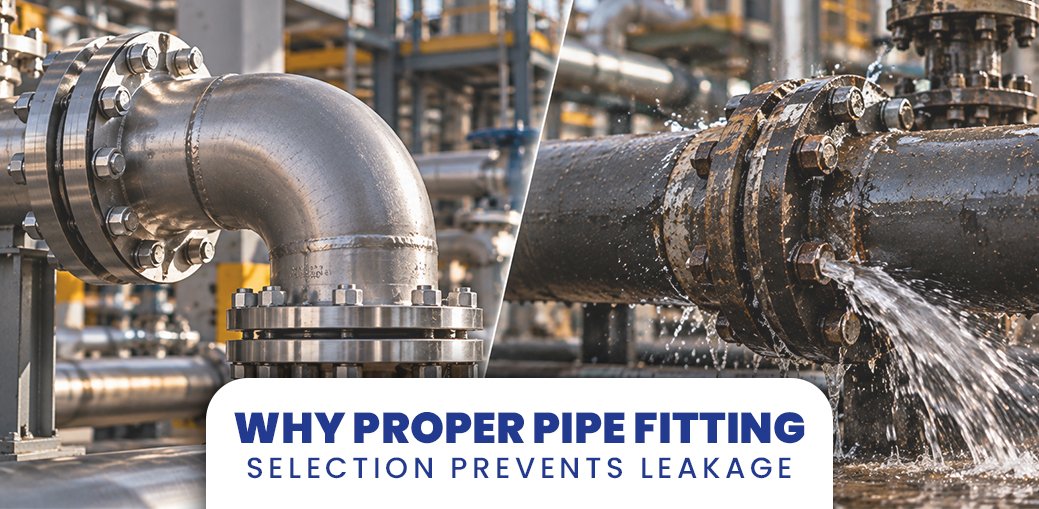
Pipe fittings play a critical role in industrial piping systems by connecting pipes, changing flow direction, and maintaining secure joints. Although fittings may appear to be small components, incorrect selection can lead to leakage, pressure loss, and unexpected maintenance requirements. Choosing suitable pipe fittings is essential for maintaining system efficiency, safety, and long-term reliability.
Why Pipe Fitting Selection Matters
Proper pipe fitting selection ensures compatibility with the pipeline’s dimensions, operating pressure, temperature, and transported fluid. Incorrect fittings can create weak connections, accelerate corrosion, or compromise sealing performance. Selecting suitable materials and connection types helps reduce leakage risks and maintain reliable industrial operations.
Key Factors to Consider When Selecting Pipe Fittings
Several technical factors influence the performance and reliability of industrial pipe fittings.
Material Compatibility
Fittings must be compatible with the transported fluid and operating environment. Stainless steel fittings are commonly used where corrosion resistance is important, while carbon steel fittings are suitable for many industrial applications.
Correct Size and Dimensions
Pipe fittings should match the pipeline’s nominal size, wall thickness, and connection specifications to ensure proper alignment and secure assembly.
Pressure and Temperature Ratings
Fittings must withstand the system’s expected operating pressure and temperature to prevent deformation, leakage, or premature failure.
How Connection Types Affect Leakage Prevention
Different piping systems require different fitting connections, each with specific installation and sealing requirements.
Threaded Connections
Threaded fittings are commonly used in smaller piping systems. Proper thread engagement and suitable sealing methods help prevent leakage.
Welded Connections
Welded fittings create permanent joints and are widely used in industrial systems requiring secure connections. Correct welding procedures are essential for joint integrity.
Flanged Connections
Flanged fittings allow easier assembly and maintenance. Appropriate gaskets, bolting, and installation procedures help maintain reliable sealing.
Importance of Quality and Proper Installation
Even correctly selected fittings can develop leaks when installed improperly. Poor welding, incorrect tightening, damaged sealing surfaces, and misalignment can compromise joint integrity. Hatimi Steel Traders supplies stainless steel and carbon steel pipe fittings for various industrial applications, helping businesses source components suited to their piping requirements.
Conclusion
Proper pipe fitting selection is essential for preventing leakage and maintaining industrial piping efficiency. Material compatibility, correct sizing, pressure ratings, connection types, and installation quality all contribute to reliable performance. Choosing suitable fittings helps reduce maintenance costs, minimize operational interruptions, and improve system durability.
Explore dependable industrial pipe fittings and stainless steel solutions at Hatimi Steel Traders.
